


-
-
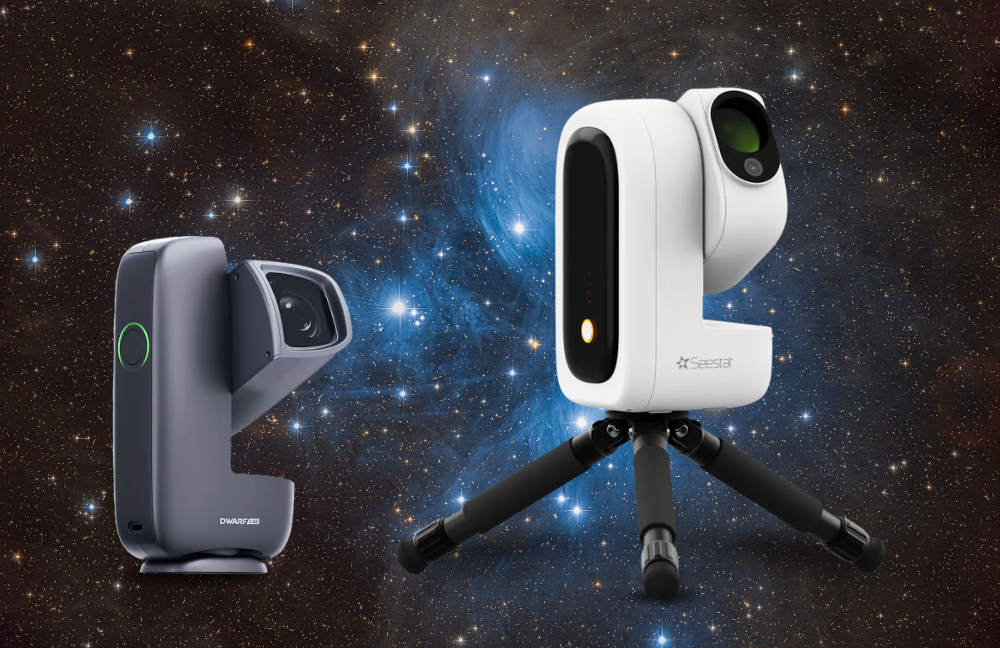
SMART telescopes: which one should you choose?
September 04 2026 -

What are the different types of clouds?
July 28 2026


Birdwatching equipment
Birdwatching is the practice of observing birds in their natural habitat, an activity that combines passion, curiosity, and a direct connection with nature. Observing birds can take place in many contexts: while traveling, during dedicated excursions, or simply in everyday life by learning to notice details that often go unseen by a distracted eye.
To approach birdwatching in an informed and rewarding way, it is important to develop both basic knowledge and use the right equipment. There are many field guides available for bird identification, ideal for beginners who want to recognize common species and gradually expand their observation skills over time.
When it comes to equipment for birdwatching and wildlife observation, two main types of optics are commonly used: binoculars and spotting scopes. Binoculars are lightweight, versatile, and easy to handle, while spotting scopes are ideal for long-distance observations where greater detail is required.
Binoculars are especially practical, as they can be comfortably used handheld thanks to their relatively moderate magnification. For example, models such as 8x32 (8x magnification with a 32 mm objective lens) or 10x42 provide a stable grip and allow for clear observations without unwanted image shake.
Another key advantage of binoculars is their wide field of view, which makes it easier to follow moving subjects without losing sight of them, especially when the subject is not too fast or too close. In birdwatching and nature observation, conditions are often suitable for calm and controlled viewing, allowing users to fully appreciate the performance of their optics.
High brightness is another essential feature. A binocular with an exit pupil of at least 4 mm (calculated by dividing the objective diameter by the magnification) performs well even in less-than-ideal lighting conditions. This makes it possible to observe wildlife not only during the day but also at dusk or in low-light environments while maintaining good image clarity.
Additionally, binocular vision, using both eyes, offers a more immersive and comfortable viewing experience. The brain processes the images more naturally, reducing eye strain during extended observation sessions and making it easier to perceive fine details, depth, and movement.
Here are some examples:
- • Levenhuk Karma BASE 8x32 Binoculars
- • Levenhuk Karma PRO 8x32 Binoculars
- • Levenhuk New Karma PRO ED 8x42 Binoculars
- • Levenhuk New Vegas ED 10x42 Binoculars
- • KOWA BD II 8x42 XD binocular
 |
 |
| Levenhuk Karma BASE 8x32 Binoculars | KOWA BD II 8x42 XD binocular |
Image-stabilized binoculars are a category particularly appreciated in birdwatching, where it is essential to observe moving subjects while maintaining a stable and detailed image.
In high-magnification binoculars, one of the most critical aspects is image stability. Due to their natural sensitivity to vibrations, even small involuntary hand movements can cause image shake, making it difficult to observe fine details—such as reading text or distinguishing distant features.
To address this issue, stabilized binoculars are equipped with an optoelectronic image stabilization system. This system integrates internal optical elements that, through electronic control, compensate for vibrations in real time, delivering a steady, sharp, and comfortable viewing experience.
Here are some models:
- • Fujinon Techno-Stabi 16x28 Waterproof Image-Stabilized Binocular with soft case
- • Fujinon Techno-Stabi TS-L 20x40 WP stabilised binoculars with soft case

When the subject is quite far away, so much so that it appears too small through binoculars like those mentioned above, the preferred solution may be to use a spotting scope. Thanks to its optical characteristics, a spotting scope allows for significantly higher magnification.
The level of detail provided by a spotting scope is greater than that of binoculars, reaching magnifications of 60x or more (for example, 60x magnification brings a subject located 1 km away to an apparent distance of about 16 meters). However, it necessarily requires a stable support system, such as a photographic tripod, to keep the image steady due to its sensitivity to vibrations.
This need for support becomes especially important when magnification exceeds 15–20x.
Here are some examples:
- • Levenhuk Blaze BASE 70 spotting scope
- • Levenhuk New Blaze PLUS 80 Spotting Scope
- • Levenhuk New Blaze PLUS 100 Spotting Scope
- • Kowa TSN 66A PROMINAR angled spotting scope

Levenhuk New Blaze PLUS 80 Spotting Scope
For this reason, a spotting scope represents the ideal choice for long-distance observation, where capturing even the smallest details is essential. However, compared to binoculars, it requires more preparation and a more static setup.
Ultimately, the choice depends on the type of experience you are looking for: dynamic and immediate with binoculars, or more detailed and in-depth with a spotting scope.
Getting into birdwatching means connecting directly with nature, but it also involves an important responsibility: to respect and protect it. Preserving wildlife and natural habitats should always be a priority, avoiding any behavior that could disturb animals in their environment.
To fully enjoy this experience, it is essential to adopt a discreet approach, moving calmly and avoiding sudden noises. This helps birds feel safe and allows for more authentic observation without altering their natural behavior.
Ultimately, the true value of birdwatching lies in this: observing without interfering, discovering nature in its purest balance.